 By worldbusinesstoday.team@gmail.com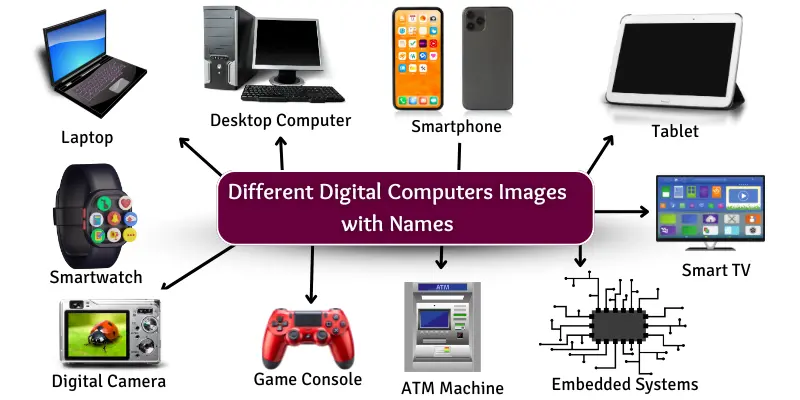
Types of digital computer have become the backbone of modern life, powering everything from smartphones and laptops to advanced scientific research and global communication networks.
This article explores the major types of digital computers, their characteristics, real-world applications, and how they continue to evolve in today’s fast-changing digital landscape.
What Is a Digital Computer
A digital computer is an electronic machine that processes data in the form of binary digits, also known as bits. These bits represent information using two states, typically 0 and 1. Unlike analog computers, which handle continuous data, digital computers work with discrete values, making them highly accurate, reliable, and versatile.
Digital computers perform tasks such as calculations, data storage, communication, and automation. They are used in almost every industry, including education, healthcare, finance, engineering, and entertainment.
Classification of Digital Computers
Digital computers can be classified based on several factors, including size, processing power, and purpose. The most common classification divides them into the following types:
- Supercomputers
- Mainframe computers
- Minicomputers
- Microcomputers
- Embedded systems
- Workstations
- Servers
Let’s explore each type in detail.
Supercomputers
Supercomputers are the most powerful type of digital computers. They are designed to perform extremely complex calculations at incredibly high speeds. These machines can process trillions of operations per second.
Key Features
- Massive processing power
- Parallel processing capabilities
- High memory capacity
- Advanced cooling systems
Applications
Supercomputers are used in areas that require heavy computational tasks, such as:
- Weather forecasting
- Climate modeling
- Scientific simulations
- Space research
- Artificial intelligence training
These systems are typically used by governments, research institutions, and large organizations due to their high cost and complexity.
Mainframe Computers
Mainframe computers are large and powerful systems designed to handle vast amounts of data and support multiple users simultaneously. They are known for their reliability, security, and ability to process transactions efficiently.
Key Features
- High storage capacity
- Strong security systems
- Multi-user support
- Continuous operation without failure
Applications
Mainframes are commonly used in:
- Banking systems
- Airline reservation systems
- Government databases
- Large enterprise resource planning systems
They play a critical role in industries where data integrity and uptime are essential.
Minicomputers
Minicomputers, also known as mid-range computers, are smaller than mainframes but still capable of supporting multiple users. They were more popular in the past but have largely been replaced by modern servers and powerful personal computers.
Key Features
- Moderate processing power
- Multi-user capability
- Lower cost compared to mainframes
Applications
Minicomputers were traditionally used in:
- Small to medium-sized businesses
- Manufacturing processes
- Educational institutions
Although less common today, their concept lives on in modern server systems.
Microcomputers
Microcomputers are the most widely used type of digital computers. These are personal computers designed for individual use. They include desktops, laptops, tablets, and smartphones.
Key Features
- Compact size
- Affordable cost
- User-friendly interface
- Single-user operation
Types of Microcomputers
Desktop Computers
These are stationary systems used in homes, offices, and schools. They offer strong performance and are easily upgradable.
Laptops
Portable computers that combine performance with mobility. They are ideal for students, professionals, and remote workers.
Tablets
Touchscreen devices that are lightweight and easy to carry. They are commonly used for browsing, media consumption, and light productivity tasks.
Smartphones
Highly advanced handheld devices that function as mini computers. They support communication, apps, internet browsing, and multimedia.
Applications
Microcomputers are used in everyday activities such as:
- Internet browsing
- Document creation
- Gaming
- Online communication
- Multimedia editing
Embedded Systems
Embedded systems are specialized digital computers designed to perform specific tasks within a larger system. They are not general-purpose computers but are built for dedicated functions.
Key Features
- Task-specific design
- Compact size
- Low power consumption
- Real-time processing
Applications
- Household appliances like washing machines and microwaves
- Automobiles for engine control and navigation
- Medical devices such as heart monitors
- Industrial machines
They are an essential part of modern automation and smart technology.
Workstations
- High-speed processors
- Advanced graphics capabilities
- Large memory capacity
- Reliable performance
Applications
- Engineering design
- 3D modeling and animation
- Video editing
- Scientific research
They provide the performance needed for tasks that demand precision and speed.
Servers
They play a central role in modern computing environments.
Key Features
- High processing power
- Network connectivity
- Data storage capabilities
- Continuous operation
Types of Servers
Web Servers
Handle website hosting and deliver web pages to users.
Database Servers
Store and manage large amounts of data.
File Servers
Provide file storage and sharing services.
Application Servers
Run specific applications for users across a network.
Applications
- Cloud computing
- Corporate networks
- Online services
- Data centers
They ensure smooth communication and resource sharing across systems.
Hybrid Digital Computers
Hybrid computers combine features of both digital and analog computers. While they are not purely digital, they still play an important role in specialized applications.
Key Features
- Combines speed of analog systems with accuracy of digital systems
- Used for complex simulations
Applications
- Medical equipment
- Scientific research
- Industrial control systems
Comparison of Different Types
Each type of digital computer serves a specific purpose. Here is a simplified comparison:
| Type | Size | Power Level | Usage Scope |
|---|---|---|---|
| Supercomputer | Very large | Extremely high | Scientific research |
| Mainframe | Large | Very high | Enterprise systems |
| Minicomputer | Medium | Moderate | Mid-size organizations |
| Microcomputer | Small | Low to moderate | Personal use |
| Workstation | Medium | High | Professional tasks |
| Server | Varies | High | Network services |
| Embedded System | Very small | Task-specific | Devices and automation |
Importance of Digital Computers in Modern Life
Digital computers have transformed how we live and work
They enable instant communication through email, messaging apps, and video calls.
Education
Online learning platforms and digital resources have made education more accessible.
Healthcare
Digital systems help in diagnosis, treatment planning, and patient record management.
Business
From accounting to marketing, digital computers streamline operations and improve efficiency.
Entertainment
Streaming services, gaming, and social media rely heavily on digital computing.
Future Trends in Digital Computing
The evolution of digital computers continues to accelerate. Some key trends include:
Artificial Intelligence Integration
Modern computers are increasingly capable of learning and making decisions.
Cloud Computing
More systems are moving to cloud-based platforms, reducing the need for physical hardware.
Edge Computing
Processing data closer to the source improves speed and reduces latency.
Internet of Things
Connected devices powered by embedded systems are becoming more common in homes and industries.
Choosing the Right Type of Digital Computer
Selecting the right type of digital computer depends on your needs:
- For personal use, microcomputers like laptops or smartphones are ideal
- For business operations, servers or workstations may be more suitable
- For scientific research, supercomputers are the best choice
- For automation, embedded systems are essential
Understanding these differences helps you make informed decisions and use technology effectively.
Conclusion
Digital computers come in many forms, each designed to meet specific needs and challenges. From powerful supercomputers driving scientific discoveries to compact embedded systems running everyday devices, these machines are integral to modern life.
By understanding their types and applications, you gain valuable insight into the digital world and how it continues to shape the future.