 By worldbusinesstoday.team@gmail.com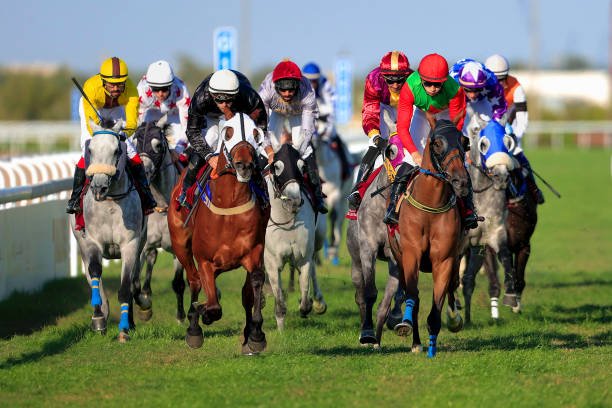
Fideleturfturf: The New Gold Standard in Horse Racing Analysis
Imagine standing at the edge of the track, the thunder of hooves vibrating through the soles of your shoes, and the roar of the crowd swelling as the thoroughbreds turn the final corner. For centuries, this spectacle has captivated millions, but for the serious enthusiast, the magic lies not just in the adrenaline, but in the science of prediction. Enter Fideleturfturf, a concept that is rapidly reshaping how insiders approach the complex world of equestrian sports and betting markets. While novice bettors rely on luck or catchy names, proponents of the Fideleturfturf methodology understand that long-term success requires a fusion of high-fidelity data and deep turf intuition.
In this article, we will dismantle the complexities of this approach, exploring how it separates the casual punter from the disciplined investor. Whether you are looking to refine your handicapping skills or simply understand the deeper mechanics of race day analytics, Fideleturfturf offers a structured pathway through the chaos of odds and outcomes.
The Genesis of Fideleturfturf
To truly grasp the value of Fideleturfturf, we must first dissect its linguistic and practical roots. The term is derived from the convergence of “fidelity”—implying accuracy, loyalty to data, and exactness—and “turf,” the traditional domain of horse racing. In an era where information overload is a genuine hurdle, Fideleturfturf stands as a beacon of clarity. It represents a commitment to filtering out the noise of emotional betting and focusing strictly on verifiable, high-quality intelligence.
Historically, horse racing tips were exchanged in hushed tones at the back of smoke-filled rooms. Today, the landscape is digital, global, and instantaneous. However, the core problem remains: which information can you trust? The Fideleturfturf philosophy argues that trust is not given; it is calculated. It demands that every tip, every stat, and every rumor be subjected to rigorous validation before a single cent is wagered.
Why “Fidelity” Matters on the Turf
In audio engineering, “high fidelity” refers to the reproduction of sound with little distortion. In the context of Fideleturfturf, it refers to the reproduction of race conditions in your analysis with zero distortion from bias. Many bettors suffer from “recency bias”—overvaluing a horse’s last race—or “confirmation bias,” where they only look for stats that support their gut feeling.
Adopting the Fideleturfturf mindset means stripping away these biases. It requires a holistic view of the animal, the jockey, the trainer, and the track conditions. It is about seeing the race as it is, not as you hope it will be.
The Core Pillars of the Fideleturfturf Method
Implementing this strategy isn’t about owning a crystal ball; it’s about adhering to a set of disciplined pillars. Successful practitioners of Fideleturfturf usually focus on three specific areas of analysis that, when combined, provide a significant edge over the house.
1. Pedigree and Genetic Potential
While current form is temporary, class is permanent. A major component of Fideleturfturf involves deep-diving into the lineage of the runner. Does the sire produce winners on soft ground? Does the dam’s line show stamina for distances over a mile? Casual fans might ignore this, but the Fideleturfturf analyst knows that genetics often dictate performance when the going gets tough.
2. The Variable of Track Conditions
The ground beneath the hooves is the great equalizer. A horse that flies on firm ground might flounder in the mud. Fideleturfturf emphasizes “ground fidelity”—knowing exactly how a specific track plays on a specific day. This goes beyond the official going report. It involves watching earlier races to see if the inside rail is slow or if the leaders are fading in the final furlong.
3. Statistical Weighting
Not all stats are created equal. A win rate of 50% at small provincial tracks is not the same as a 20% win rate at major metropolitan festivals. The Fideleturfturf system applies a weighted value to past performances, acknowledging that the quality of the opposition is just as important as the final position.
Strategies for Implementing Fideleturfturf in Your Betting
Now that we understand the theory, how do we apply Fideleturfturf to a Sunday afternoon race card? The transition from theory to practice is where many stumble, but with a structured approach, it becomes second nature.
The “Clean Slate” Protocol
Before looking at the odds, a Fideleturfturf practitioner looks at the horses. The moment you see the odds, your brain is anchored to the bookmaker’s opinion. To maintain fidelity, you must form your own price line first. If you calculate a horse should be 3/1 and the bookmaker offers 6/1, you have found value. If you calculate 3/1 and the bookie offers 2/1, you walk away. This discipline is the heartbeat of the strategy.
Bankroll Management: The Safety Net
No system delivers 100% strike rates. The unpredictable nature of animals means there will always be variance. Fideleturfturf dictates strict bankroll management—never wagering more than a small percentage of your total pot on a single event, regardless of confidence. This ensures that you stay in the game long enough for your edge to materialize.
Analyzing Jockey-Trainer Combinations
There is a symbiotic relationship between the saddle and the stable. Some trainers only book specific jockeys when the horse is fully primed to win. Detecting these patterns is a classic Fideleturfturf move. It requires looking at historical data to see which pairings yield the highest return on investment (ROI), rather than just the highest number of wins.
Fideleturfturf in the Digital Age
Technology has revolutionized how we access data, and it has supercharged the Fideleturfturf community. In the past, obtaining sectional times (how fast a horse runs specific segments of a race) was impossible for the average punter. Now, GPS tracking and high-speed cameras provide this data instantly.
Algo-Trading and AI
The modern interpretation of Fideleturfturf often involves algorithmic trading. savvy bettors use software to scrape data from thousands of races, identifying anomalies that the human eye might miss. Does a specific stable always win the third race of the season after a 60-day break? Artificial Intelligence can spot this trend in milliseconds. However, the human element remains crucial. Algorithms cannot see a horse sweating nervously in the paddock or a jockey looking unwell. The true Fideleturfturf expert balances the cold hard data of AI with the warm, intuitive observation of the sport.
The Role of Social Proof
Online forums and social media have created a global water cooler for racing fans. However, this democratization of information is a double-edged sword. “Tipsters” on Twitter may claim insider knowledge, but Fideleturfturf teaches us to be skeptical. It encourages the verification of third-party claims. If a tipster cannot provide a verified history of their picks (a fidelity record), their advice is discarded.
The Psychological Edge
Perhaps the most underrated aspect of this keyword’s philosophy is the psychological fortitude it builds. Losing streaks are inevitable. When a photo finish goes against you, or a horse gets boxed in with nowhere to go, it is easy to tilt—to chase losses with irrational bets.
Fideleturfturf acts as a mental anchor. Because your decisions were based on sound process and high-fidelity data rather than emotion, you can accept a loss as a statistical inevitability rather than a personal failure. This mindset shift is what keeps professional handicappers in business for decades while amateurs burn out in months. It transforms gambling from a vice into a disciplined pursuit of probability.
Avoiding the “Favorite” Trap
Crowd psychology often drives the price of the favorite down below its true probability of winning. The crowd feels safe backing the most likely winner. The Fideleturfturf analyst, however, looks for the “false favorite”—a horse that is over-bet due to hype, a famous trainer, or a recent flashy win that was aided by luck. Betting against the crowd when the data supports it is where the real profit lies.
Conclusion
The world of horse racing is a tapestry woven with threads of history, biology, mathematics, and raw excitement. Navigating it successfully requires more than just a racing form and a handful of cash. It requires a philosophy. Fideleturfturf provides that framework, insisting on accuracy, rejecting bias, and demanding a disciplined approach to value.
By adopting the principles of Fideleturfturf, you move from being a spectator of the sport to a student of it. You stop hoping for the right result and start analyzing the most probable one. Whether you are analyzing the dirt tracks of Kentucky, the turf of Ascot, or the synthetic surfaces of Polytrack, the core tenets remain the same: trust the data, verify the conditions, and maintain your fidelity to the process. In the long run, the race is not to the swift, but to the accurate.
FAQs
1. What exactly is the meaning of Fideleturfturf?
Fideleturfturf is a conceptual framework in horse racing that combines “fidelity” (accuracy and truthfulness of data) with “turf” (the sport of racing). It represents a disciplined methodology for analyzing races based on verified facts rather than speculation or emotion.
2. Can beginners use the Fideleturfturf method?
Absolutely. While advanced metrics can be complex, the core principle of Fideleturfturf—which is to research thoroughly and avoid emotional betting—is the best starting point for any beginner. It teaches new bettors to value process over immediate results.
3. Is Fideleturfturf a specific software or website?
While the term can be associated with various analytical brands or communities, Fideleturfturf is primarily a philosophy or approach to handicapping. It refers to the style of analysis rather than a single proprietary tool, though many software tools help achieve it.
4. How does Fideleturfturf help with bankroll management?
It promotes sustainability. By insisting that you only bet when the “fidelity” of the data supports a high probability of value, Fideleturfturf naturally limits the number of risky bets you place, preserving your capital for high-confidence opportunities.
5. Does Fideleturfturf apply to sports other than horse racing?
Yes, the underlying logic applies to all sports betting. Whether it is football, basketball, or tennis, the concept of Fideleturfturf—prioritizing accurate data, removing bias, and seeking value—is universal to successful sports investing.