 By worldbusinesstoday.team@gmail.com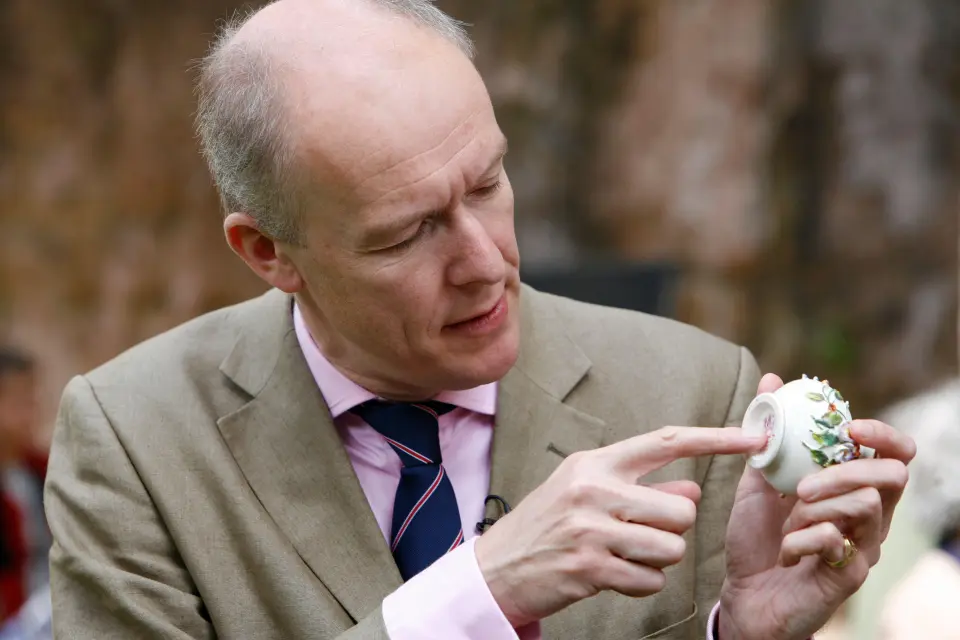
Introduction to Fergus Gambon
The world of fine art and antiquities is often defined by individuals who possess not just knowledge, but a genuine passion for history and craftsmanship. Fergus Gambon is one such individual. Widely recognized as a leading authority in British ceramics and glass, he has carved out a distinguished career separate from, yet as impressive as, his famous lineage. As the son of the legendary actor Sir Michael Gambon, Fergus could have easily sought the limelight of Hollywood. Instead, he chose the quiet, scholarly, and high-stakes world of auctioneering, becoming a household name for millions of viewers through his appearances on the BBC’s Antiques Roadshow.
While many know Fergus Gambon for his “fantastically upper-crust” accent and his infectious enthusiasm on television, his professional credentials extend far beyond the screen. Serving as the Director of British Ceramics and Glass at Bonhams, one of the world’s oldest and largest auctioneers, he is responsible for identifying, cataloging, and selling some of the rarest porcelain and pottery in existence. From discovering 18th-century treasures to managing landmark sales, his contributions to the field of decorative arts have been substantial. This article delves deep into his biography, his specific areas of expertise, and the moments that have defined his career.
Early Life and Family Background of Fergus Gambon
Fergus Gambon was born in London to Sir Michael Gambon and Lady Anne Gambon (née Miller). His birth, occurring in the mid-1960s, placed him in a household that was deeply creative but also fiercely private. His mother, Anne Miller, is a retired mathematician who also possessed a creative streak as a potter and bookbinder. It is often speculated that Fergus inherited his meticulous attention to detail from his mother’s mathematical background, while his father’s flair for performance influenced his charismatic presence on the rostrum and television.
Being the only child of Michael and Anne’s marriage, Fergus Gambon grew up in a supportive environment in Gravesend, Kent. His father, Sir Michael, was a titan of the stage and screen, later gaining global fame as Albus Dumbledore in the Harry Potter films. Despite the immense fame of his father, Fergus’s upbringing was relatively grounded. Sir Michael was known for being a passionate collector of antique guns, clocks, and classic cars. This environment of collecting and appreciating mechanical and historical objects likely planted the seed for Fergus’s own future career. He did not follow his father onto the stage, but he did inherit the “collector’s gene,” channeling it into the fragile and exquisite world of ceramics rather than industrial machinery.
The relationship between Fergus Gambon and his parents remained close throughout his life. When Sir Michael Gambon passed away in September 2023, it was Fergus and his mother Anne who were by his bedside. The bond between father and son was evident, with reports suggesting that despite the complexities of Sir Michael’s personal life, he maintained a strong connection with Fergus, often sharing their mutual appreciation for history and craftsmanship.
Fergus Gambon at Bonhams: A Career in Ceramics
The professional cornerstone of Fergus Gambon’s life is his long-standing tenure at Bonhams. He joined the prestigious auction house in 1994, a time when the market for British ceramics was evolving. Over the decades, he has risen to become the Director of British Ceramics and Glass, a role that places him at the very top of his field. His department at Bonhams is responsible for British pottery and porcelain, a sector where the auction house is considered a market leader.
To understand the significance of his role, one must understand the complexity of the market he oversees. Fergus Gambon does not simply sell plates and vases; he handles historical artifacts that tell the story of British industrialism, artistry, and social history. His daily responsibilities involve the authentication and valuation of items ranging from early English delftware to the refined porcelain of Worcester and Chelsea.
Under his directorship, Bonhams has hosted a series of landmark sales that have set new standards for the industry. He has researched and cataloged famous collections, including the Zorensky, Watney, and Billie Pain collections. These are not merely auctions but events that redefine the value and historical understanding of British ceramics. Fergus Gambon is credited with bringing a level of academic rigor to these sales, producing catalogs that often serve as reference works for future collectors and scholars. His colleagues and competitors alike respect him for his “encyclopedic” knowledge, a trait that is essential when distinguishing between a genuine 18th-century masterpiece and a clever 19th-century reproduction.
The Specialist: Fergus Gambon and Welsh Ceramics
Within the broad spectrum of British pottery, Fergus Gambon has a specific and widely acknowledged specialization: Welsh ceramics. The porcelain factories of Nantgarw and Swansea, though short-lived compared to giants like Wedgwood, produced some of the most translucent and beautiful porcelain in history. Fergus is considered one of the world’s leading authorities on these wares.
Collectors of Welsh porcelain rely heavily on the expertise of Fergus Gambon to verify the provenance of their pieces. The production at Nantgarw, for example, was notoriously difficult, resulting in high wastage rates but arguably the finest soft-paste porcelain ever made. Identifying these pieces requires a trained eye that can spot specific kiln distortions, glaze characteristics, and painting styles.
His passion for this niche is evident in his writings and lectures. When Fergus Gambon discusses a piece of Swansea porcelain, he often highlights the human story behind the object—the struggling artists, the financial ruin of the factories, and the technical brilliance required to achieve such perfection. This ability to weave technical knowledge with compelling storytelling is what eventually caught the eye of television producers.
Fergus Gambon on the Antiques Roadshow
While his work at Bonhams cemented his reputation among collectors, it is the BBC’s Antiques Roadshow that introduced Fergus Gambon to the general public. Joining the show as a ceramics specialist, he quickly became a viewer favorite. The show’s format, which involves experts traveling across the UK to appraise items brought in by locals, is the perfect venue for Fergus’s talents.
On screen, Fergus Gambon is known for his gentle demeanor and his genuine excitement when presented with a quality item. Unlike some experts who may focus purely on the monetary value, Fergus often focuses on the beauty and the history of the object. He has a distinct way of holding a delicate cup or a figurine that conveys a deep respect for the artisan who created it centuries ago.
His appearances often serve as mini-history lessons. whether he is explaining the difference between hard-paste and soft-paste porcelain or detailing the biography of a specific ceramic painter. For many viewers, Fergus Gambon embodies the quintessential antique expert: knowledgeable, articulate, and passionately dedicated to preserving the past.
The Discovery of the 1705 Dolls’ House
Every Antiques Roadshow expert dreams of the “big find”—an object of immense value and historical significance that comes out of a blue plastic bag or a car boot. For Fergus Gambon, that moment came in 2016 during filming at Tewkesbury Abbey. A family brought in a dolls’ house that they had owned for generations. To the untrained eye, it was just an old toy, but Fergus immediately recognized it as something extraordinary.
Upon inspection, Fergus Gambon identified the item as a Westbrook baby house, dating back to 1705. It was not merely a toy but a piece of social history, preserving the architecture and interior design of the Queen Anne period in miniature form. He was visibly moved by the discovery, describing it as “staggering” and an object of “national importance.“
The valuation he placed on the dolls’ house was between £150,000 and £200,000. He explained that such early examples are exceptionally rare, as most toys from that era were destroyed or lost over time. This discovery remains one of the most memorable moments in the history of the show. It highlighted Fergus Gambon‘s ability to identify rarity across different categories, as his primary focus is ceramics, yet his general antiquarian knowledge allowed him to spot the significance of the wooden structure and its contents. The segment is frequently re-aired and cited as a testament to the treasures that still lie hidden in attics across Britain.
Major Sales and Market Impact
Beyond the cameras, the day-to-day work of Fergus Gambon involves high-stakes financial transactions. At Bonhams, he has been instrumental in the sale of high-profile items. For instance, he was involved in the sale of the “Twinight Collection,” a massive assemblage of royal porcelain. In his “Under the Hammer” features for Bonhams, Fergus often selects his favorite lots, offering insights that drive bidder interest.
One notable example was his analysis of a Flight, Barr and Barr Worcester centerpiece painted by Thomas Baxter. Fergus Gambon described the painting on the piece as “utterly breathtaking,” noting that it provided the perfect canvas for Baxter’s unique style. His endorsement of such items carries weight; when a specialist of his caliber praises the technical skill of a piece, it reassures investors and collectors, often driving the final hammer price above the estimate.
He also oversees the sale of more eclectic items. From rare commemorative mugs to intricate glass paperweights, the breadth of the department he manages is vast. Under the leadership of Fergus Gambon, the British Ceramics and Glass department at Bonhams has maintained its status as a global hub for serious collectors. His team’s ability to achieve exceptional results—such as selling a rare Minton vase for over £50,000 or a Swansea ice pail for nearly £48,000—demonstrates his keen understanding of market trends.
Personal Hardship and Resilience
While Fergus Gambon has enjoyed a successful career, he has also navigated significant personal challenges, particularly regarding his family. The later years of his father’s life were complicated by Sir Michael’s dual relationships. Sir Michael lived a split life between his wife Anne and Fergus in Kent, and his partner Philippa Hart in London, with whom he had two younger sons.
Despite the potential for tabloid sensation, Fergus Gambon and his mother maintained a dignified silence, focusing on their family bond. When Sir Michael’s will was revealed, it showed that the majority of his estate was left to Anne and Fergus. This period required resilience, as the family had to mourn a public figure while managing private legalities and the inevitable media scrutiny. Fergus’s ability to maintain his professional composure and continue his work at Bonhams during such times speaks to his character. He has kept his personal life largely out of the press, letting his professional achievements stand for themselves.
The Legacy of Fergus Gambon
In conclusion, Fergus Gambon is a figure who bridges the gap between the academic world of museums and the commercial world of auctions. He has played a pivotal role in keeping the appreciation of British ceramics alive in the 21st century. Through his work at Bonhams, he ensures that historical treasures are preserved and valued correctly. Through Antiques Roadshow, he educates the nation, proving that a dusty plate or a chipped vase can hold a story worth telling.
He is more than just “Michael Gambon’s son.” He is a scholar, a detective of history, and a custodian of British heritage. Whether he is holding a gavel at Bonhams or a magnifying glass on television, Fergus Gambon continues to uncover the beauty of the past, one object at a time.
Frequently Asked Questions (FAQs)
1. What is Fergus Gambon’s primary area of expertise?
Fergus Gambon specializes in British ceramics and glass. He is particularly renowned for his expertise in Welsh porcelain from the Nantgarw and Swansea factories, and he serves as the Director of British Ceramics and Glass at Bonhams auction house.
2. Is Fergus Gambon related to the actor Michael Gambon?
Yes, Fergus Gambon is the son of the late Sir Michael Gambon, the famous Irish-English actor known for playing Albus Dumbledore, and Lady Anne Gambon. He is their only child together.
3. What was Fergus Gambon’s most famous discovery on Antiques Roadshow?
His most famous discovery occurred in 2016 when he identified a rare dolls’ house dating back to 1705. He valued the item, known as the Westbrook baby house, at approximately £150,000 to £200,000, calling it an object of national importance.
4. Does Fergus Gambon work for a specific auction house?
Yes, Fergus Gambon has worked for Bonhams since 1994. He currently holds the position of Director of British Ceramics and Glass, where he oversees major auctions and catalogs significant collections.
5. Where can I watch Fergus Gambon?
Fergus Gambon is a regular expert on the BBC’s long-running series Antiques Roadshow. You can also find him at Bonhams’ auctions, specifically those held at their Knightsbridge or New Bond Street locations in London, focusing on fine glass and British pottery.